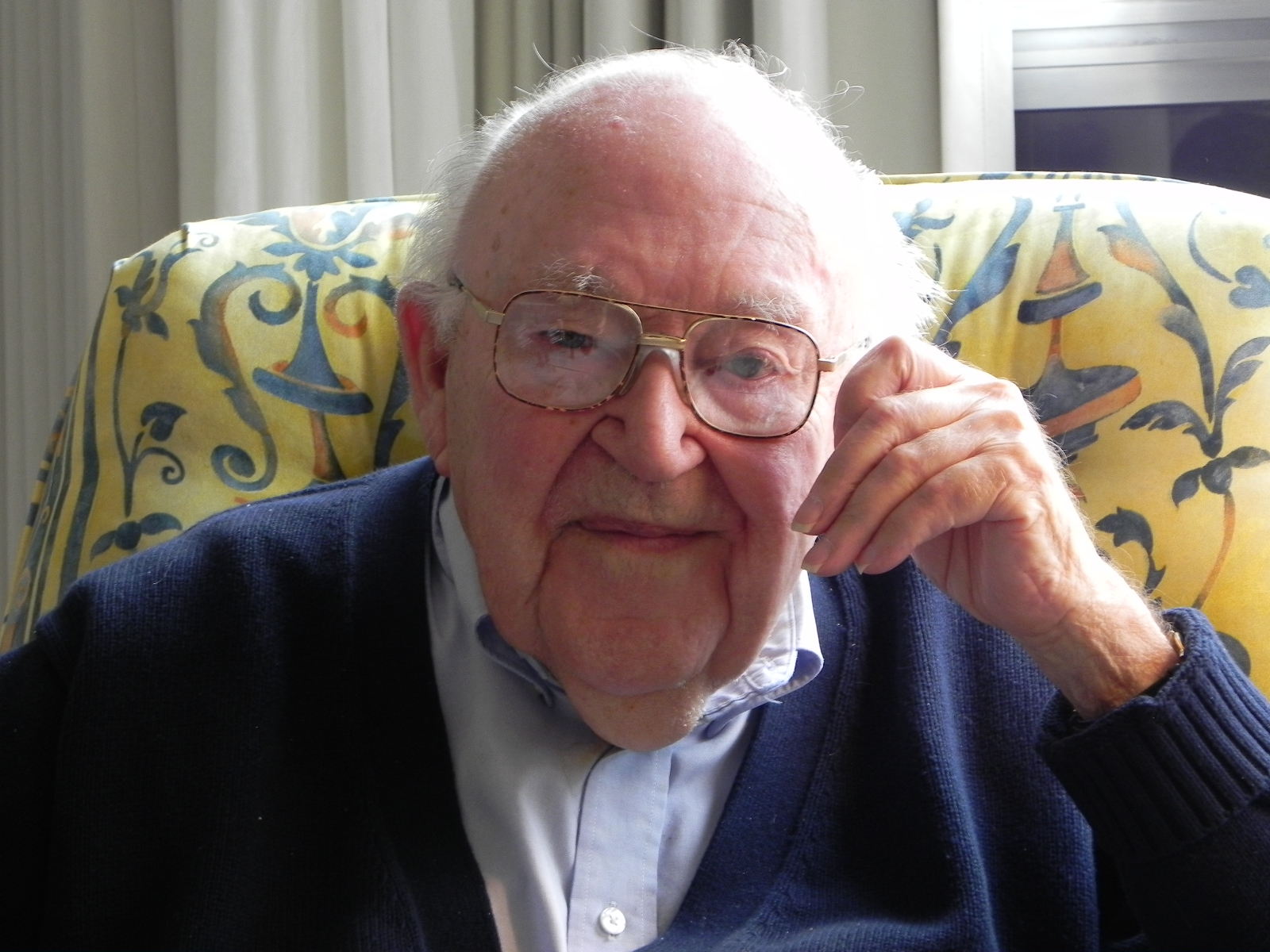
A Blind Flaneur lost one of its most faithful readers, and I lost one of my dearest friends, with the passing of Lou Bourgeois on Jan. 27 at the age of 101. I would travel to Ontario today, if I could, to grieve with his people as he is laid to rest. My own words fail me now, so let me invoke a simple poem by W.S. Merwin:
Your absence has gone through me
Like thread through a needle.
Everything I do is stitched with its color.
I was fortunate to have the opportunity to tell Lou what he meant to me. Here is what I wrote for him on his 100th birthday in 2016:
Lou Bourgeois was born 100 years ago today in Moose Jaw, Saskatchewan. As he celebrates the day simply with his loving daughter Maggie, JoAnn and I will mark the occasion by saying it is an honor to know him as a friend. He is the most charming man I’ve ever known: an engaging raconteur, a vivid yet self-effacing storyteller, a keen and genuinely curious listener, a passionate lover of music and books. He’s been a thoughtful reader of this website since its inception. And he’s the only person on the planet who still refers to me as “Young Mark.” When I grow up, I want to be just like him!
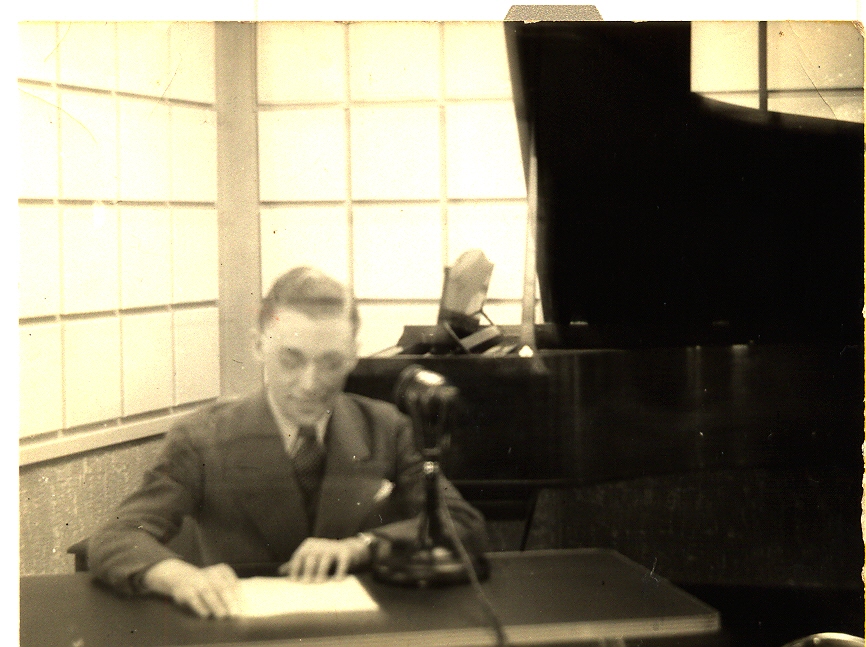
Lou grew up in Moose Jaw at the peak of the Great Depression, when Saskatchewan was Canada’s hardest hit province. He deferred university plans after high school when his rich baritone voice earned him a broadcaster position at radio station CHAB. His radio days ended in 1941 when he joined the Canadian Army in World War II.
After the war, Lou made a career in the Army, rising steadily through the ranks during 32 years of service. He served in WWII, Korea, and as an observer in Cyprus. During that time he did two tours of regimental duty (King’s Own Rifles and Queen’s Own Rifles), graduated from the senior Canadian War Staff College and held staff appointments in Canada, the UK and Germany. His final appointment was at National Defence Headquarters in Ottawa where in 1963 he was appointed the Department’s head of public affairs, a position he held for 10 years, serving under five different defence ministers. In this capacity he spent much time on Parliament Hill and traveled often to Europe for NATO meetings.
Lou retired with the rank of Brigadier General in 1973. Then he was asked to establish and manage a Brazil-Canada Chamber of Commerce to foster trade and investment between the two nations. He led that organization until 1987.
In retirement Lou has continued to indulge his love of travel, music and books. A longtime member of the Probus Club of Oakville, Ontario, he chaired that group’s nonfiction book club for 16 years. Most of the book club’s members were retired engineers with little patience for the creative liberties of narrative nonfiction. I met Lou in those years and was fortunate to hear all about his close reading and careful plans for book club discussions. He prepped like a college professor, led like a general, and coaxed persuasively like a consummate diplomat.
Every time we visit Lou we hear new stories, along with rich renditions of old favorites. After the war one of his early Army assignments was teaching raw recruits how to disassemble, clean, and reassemble 50-calibre machine guns. Just remember,” he would tell them, “your life might depend on this.” Fast forward 70 years, and there is Lou in front of a daily pre-dinner exercise class at the retirement center where he now lives: always the leader, teacher, and role model.
On Lou’s 94th birthday in 2010 we had a wonderful conversation about books and music. He told us about reading Eric Siblin’s The Cello Suites , an account of Pablo Casals’ rediscovery of Bach’s resonantly profound masterpiece. To celebrate your 100th birthday, Lou, here is Yo-Yo Ma performing Suite No. 1 in G major (BWV 1007).
Happy birthday, Lou. We look forward to talking with you again tomorrow.
About the photo: Broadcaster Lou Bourgeois prepares for work in the studio of radio station CHAB in Moose Jaw, Saskatchewan circa 1937.
![Gustave Caillebotte. Paris Street, Rainy Day (La Place de l’Europe, temps de pluie). 1877. Oil on canvas. Art Institute of Chicago. [Source: Wikimedia Commons]](wp-content/uploads/2009/02/gustave_caillebotte_paris_street_rainy_day_1877_wiki.jpg "gustave_caillebotte_paris_street_rainy_day")
![Fog at Isle Royale [Source: wildmengoneborneo.com]](wp-content/uploads/2008/04/isle_royale_fog.jpg "Fog at Isle Royale [Source: wildmengoneborneo.com]")
 If there is an emerging genetic underclass, I could run for class president or class clown. Read more in