
 If there is an emerging genetic underclass, I could run for class president or class clown. Read more in
 ![Fog at Isle Royale [Source: wildmengoneborneo.com]](../wp-content/uploads/2008/04/isle_royale_fog.jpg "Fog at Isle Royale [Source: wildmengoneborneo.com]") "Brendan, this is what the world looks like all the time to me. Just a little fog. It’s a fine day for boating on the Great Lakes.” Without missing a stroke he turned to dart a skeptical glance at me. Brendan the Navigator. When we named him I didn’t tell his mother everything the legendary Irish name implied. But I imagined him taking on the role of navigator for me. Growing up with Coastal Survey charts and tales of Great Lakes shipwrecks, he came to know Superior as another home. He never doubted the wisdom of canoeing there with a father who was half blind.
"Brendan, this is what the world looks like all the time to me. Just a little fog. It’s a fine day for boating on the Great Lakes.” Without missing a stroke he turned to dart a skeptical glance at me. Brendan the Navigator. When we named him I didn’t tell his mother everything the legendary Irish name implied. But I imagined him taking on the role of navigator for me. Growing up with Coastal Survey charts and tales of Great Lakes shipwrecks, he came to know Superior as another home. He never doubted the wisdom of canoeing there with a father who was half blind. 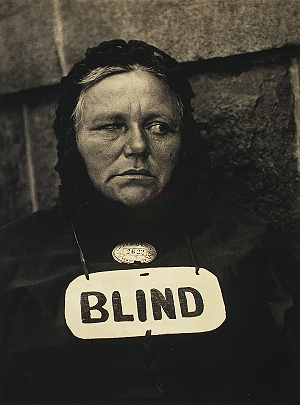
![Charlotte Casiraghi in a red dress. [Source: Stylophile]](../wp-content/uploads/2008/02/charlotte_casiraghi_red_dress.jpg "Charlotte Casiraghi in a red dress. [Source: Stylophile]") When I figured out who Charlotte Casiraghi was, I realized that I once sent a poem to her mother.
When I figured out who Charlotte Casiraghi was, I realized that I once sent a poem to her mother.  The legendary Kiki of Montparnasse posed for Man Ray’s
![Eugène Delacroix. Liberty Leading the People. 1830. Louvre, Paris. [Source: Wikimedia Commons]]](../wp-content/uploads/2008/05/delacroix_liberty_1830_2.jpg "Eugène Delacroix. Liberty Leading the People. 1830. Louvre, Paris. [Source: Wikimedia Commons]]")

 0
0
 December 13, 2023 at 11:33am
 by Mark Willis
 Every December a dark moment comes when I tell myself that I’m too old for cutting, splitting, and stacking firewood. This moment arrives with the first ice storm of winter, when I need to work outside in marginal conditions with cold, wet hands to do something that should have been finished two months sooner. That’s the voice of my inner Calvinist speaking, sanctimonious and severe. Fortunately, I don’t listen long to him.
After the dark moment passes, propelled by foul swearing to ward off the Calvinist, there comes a moment of simple, unexpected joy that I could call an epiphany. It’s something wondrous that I would not have experienced but for the necessity of working outside. Two years ago a whiff of pinyon smoke on the wind led me back into the memory of hearing a mountain lion’s yowl in New Mexico. Last year the heft and thud of a quarry bar reminded me of chopping ice in the mill race to fetch a bucket of water. Yesterday a cacophony of cranes stirred my sluggish blood.
Brendan and I were framing end walls for a makeshift woodshed when we heard them. At first I thought the sounds came from pigeons in the eaves. Then I imagined pigeons on steroids or LSD. Brendan looked up and said, “Oh, my god!” Then I recognized what I was hearing. A flock of 50 or 60 sandhill cranes crossed the clear, blue sky above us. They made a wide circle over the village at about 1,000 feet elevation, then veered southwest toward the afternoon sun. We dropped our hammers and jumped up and down with something like a barbaric yawp, or maybe it was a crude imitation of the cranes’ nuptial dance. Then a second flock of stragglers flew over in V formation, low enough for me to see the distinct pattern of their flight – not the birds themselves, but their motion across the field of my peripheral vision.
In a lifetime of birding, I’ve seen sandhill cranes only twice in Ohio. I’ve encountered them more often along migratory flyways on the Great Lakes, particularly at Whitefish Bay. The sight and sound of these huge birds, so gawky on the ground and so magisterial in flight, was thrilling every time. Several years ago, when I heard a local naturalist say that early December was sandhill migration time around here, I was skeptical. In your dreams, I thought. Then my friend John Whitmore told me about a flock he saw last December while working outside his woodshed. Now that I’ve witnessed the migration for myself, with my son’s corroboration, I’m a true believer. I worked in the wood yard until an hour after sunset in hopes of hearing that wild cacophony again.
About the image (above): Sandhill cranes fly over the Bosque del Apache National Wildlife Refuge in New Mexico. [Photo by Kristen Westlake; you can order her prints here]
Thanks also to Kristen Westlake for this photo montage with squawking sandhills on the soundtrack. That’s what I heard in my own backyard. Ms. Modigliani and I have a dream of someday witnessing the spring crane migration in Nebraska, where hundreds of thousands flock on the Platte River.
Ever since childhood, Whooping cranes have animated for me a personal mythology of freedom and wildness endangered. Read my essay, Whooping Cranes, Family Values, and the First Amendment.

0 Comments
There are no comments yet, be the first by filling in the form below.
Leave a Comment