Iranian poet Simin Behbahani speaks at a press conference in Tehran in 2007. [Photo by Behrouz Mehri/AFP/Getty Images/NPR]
The repressive regime in Tehran has seized the passport of poet Simin Behbahani, blocking her travel to Paris to give a poetry reading. According to NPR:
Known as the “lioness of Iran,” Simin Behbahani has been writing fierce poetry for decades, during the reign of Iran’s Shah, during the Islamic Revolution, during the reign of the ayatollahs, and over the past year’s political turmoil.
Through it all, she was not imprisoned and continued to enjoy the freedom to travel, says Farzaneh Milani, who teaches Persian literature at the University of Virginia and is one of Behbahani’s translators.
“We all thought that she was untouchable. And it’s amazing that a woman of 82, a woman who can barely see anymore, a woman who has brought nothing but pride for Iran, is now a prisoner in her own country,” Milani says.
Simin Behbahani spoke to NPR producer Davar Ardalan during the protests following the Iranian election last June. She read two poems over the phone, with Ardalan reading their English translations. NPR’s Thomas Pierce produced this video of the interview. See the NPR post for texts of the English translations by Kaveh Safa and Farzaneh Milani.
I received an unexpected gift recently from an Iranian blogger named Mannoushka, who translated an essay of mine into Persian and published it on the blog streetspirit.
A Word Is The Search For It is a study of “secret writing” by the Russian poet Osip Mandelstam and the Soviet psychologist Lev Vygotsky, who took great risk in the 1930s to preserve their freedom of thought in the shadow of Stalin’s Terror. It seems hauntingly relevant to Simin Behbahani’s situation today.
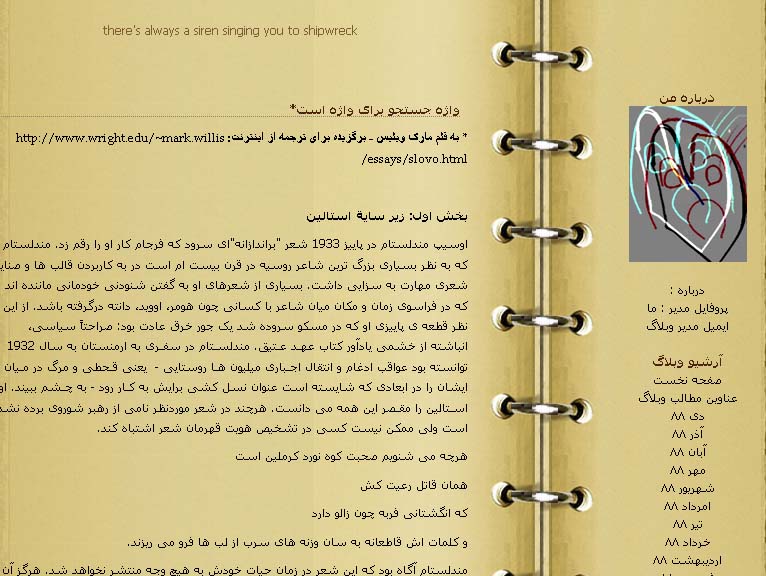 “A Word Is The Search For It” on streetspirit.ir:
Part I: In the Shadow of Stalin’s Terror
Part II: The Work of Inner Speech
Part III: Subtext and Secret Writing
Part IV: The Living Word
Part V: The Renewal of Motive
![Gustave Caillebotte. Paris Street, Rainy Day (La Place de l’Europe, temps de pluie). 1877. Oil on canvas. Art Institute of Chicago. [Source: Wikimedia Commons]](../wp-content/uploads/2009/02/gustave_caillebotte_paris_street_rainy_day_1877_wiki.jpg "gustave_caillebotte_paris_street_rainy_day")
![Fog at Isle Royale [Source: wildmengoneborneo.com]](../wp-content/uploads/2008/04/isle_royale_fog.jpg "Fog at Isle Royale [Source: wildmengoneborneo.com]")
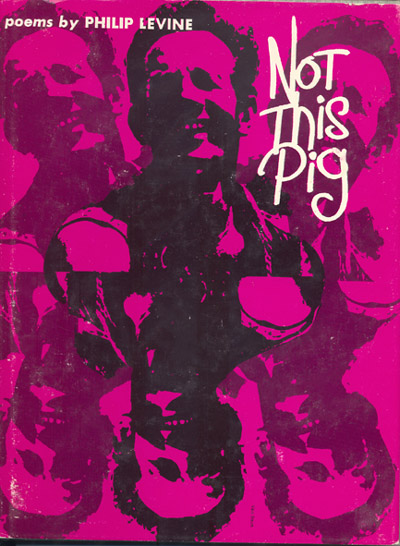 If there is an emerging genetic underclass, I could run for class president or class clown. Read more in