1.

Claude Monet. Waterloo Bridge, Gray Day

Claude Monet. The Houses of Parliament, Sunset. 1903. National Gallery of Art, Washington, D.C.
3.
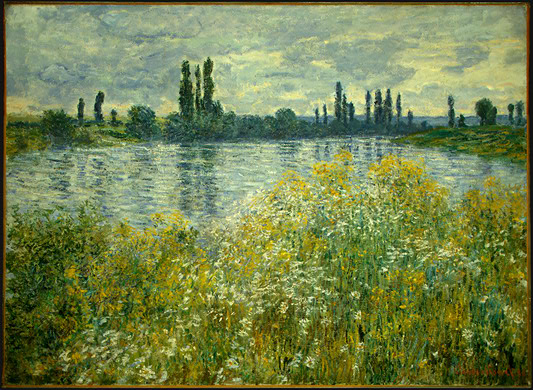
Claude Monet. Banks of the Seine, Vétheuil. 1880. National Gallery of Art, Washington, D.C.
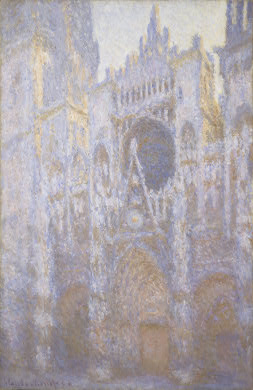
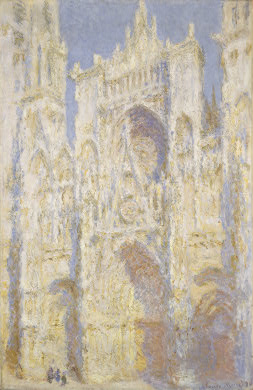
Claude Monet. Rouen Cathedral, West Façade (left) and Rouen Cathedral, West Façade, Sunlight (right). 1894. National Gallery of Art, Washington, D.C.
5.
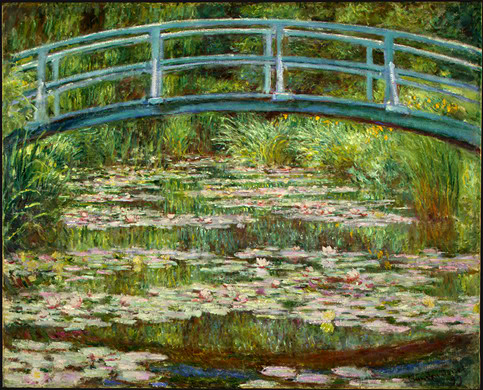
Claude Monet. The Japanese Footbridge. 1899. National Gallery of Art, Washington, D.C.
6.
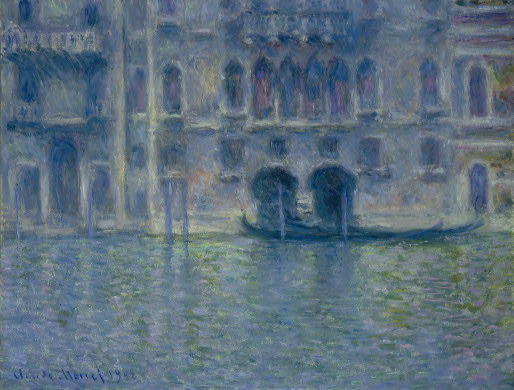
Claude Monet. Palazzo da Mula, Venice. 1908. National Gallery of Art, Washington, D.C.


![gustave_caillebotte_paris_street_rainy_day Gustave Caillebotte. Paris Street, Rainy Day (La Place de l’Europe, temps de pluie). 1877. Oil on canvas. Art Institute of Chicago. [Source: Wikimedia Commons]](http://blindflaneur.com/wp-content/uploads/2009/02/gustave_caillebotte_paris_street_rainy_day_1877_wiki.jpg)
The legendary Kiki of Montparnasse posed for Man Ray’s 

![Fog at Isle Royale [Source: wildmengoneborneo.com] Fog at Isle Royale [Source: wildmengoneborneo.com]](http://blindflaneur.com/wp-content/uploads/2008/04/isle_royale_fog.jpg)

If there is an emerging genetic underclass, I could run for class president or class clown. Read more in ![shepard_fairey_hope_2008 Shepard Fairey’s “Barack Obama/Hope” image went viral during the 2008 election. Then controversy about the image’s source transformed it into the poster child for fair use in the public debate over copyright and free culture. Now FULAB takes “Hope” as its icon [Image source: Wikipedia]](http://fairuselab.net/wp-content/uploads/2009/03/shepard_fairey_hope_2008.jpg)
![grant_wood_parson_weems_fable_200px Grant Wood. Parson Weem’s’ Fable. 1939. Amon Carter Museum, Forth Worth.. Steven Biel describes the painting: “Parson Weems, imitating Charles Willson Peale’s pose in The Artist in His Museum (1822), opens a red velvet curtain on the legendary scene: Augustine Washington, elegant in crimson coat, white ruffle, tan breeches, silver-buckled pumps, and green tricornered hat, grasps in his right hand the slim trunk of the bent cherry tree. A row of cherries dangles from the perfectly rounded treetop, mirroring the very cherry-like fringe of the Parson’s curtain. Augustine’s outstretched left palm and furrowed brow signal a serious inquiry. His son George, boyish in stature and dress—coatless, with sky-blue breeches and petite buckled pumps—is manly in his expression. In fact, his white-wigged head is that of Gilbert Stuart’s portrait and the dollar bill. He points with his right hand to the hatchet in his left. Wood chips lie in the circle of soil at the base of the tree, its lower trunk smoothly incised and poised to split off. In the background, a well-dressed slave couple harvests the fruit of a second tree.” [Alt Text Source: Common-Place/ http://www.common-place.org/vol-06/no-04/biel/ ]](http://www.bottomfeederusa.com/wp-content/uploads/2011/08/grant_wood_parson_weems_fable_200px.jpg)


Pingback: a blind flaneur