About the Flaneur
![Gustave Caillebotte. Paris Street, Rainy Day (La Place de l’Europe, temps de pluie). 1877. Oil on canvas. Art Institute of Chicago. [Source: Wikimedia Commons]](../../wp-content/uploads/2009/02/gustave_caillebotte_paris_street_rainy_day_1877_wiki.jpg "gustave_caillebotte_paris_street_rainy_day")
I walk through my blindness the way I wander down streets in Paris: unfettered and alive, alert to the raw material of the senses. I am a flaneur. Come along with me. Just don’t try to take my arm, unless I ask. What’s a flaneur? Read the first post, Return of the Flaneur to Galerie Vivienne. After that, try Foot Rage and the Blind Flaneur. Then stay tuned.Letting Go of Sight
![Fog at Isle Royale [Source: wildmengoneborneo.com]](../../wp-content/uploads/2008/04/isle_royale_fog.jpg "Fog at Isle Royale [Source: wildmengoneborneo.com]")
I’ve canoed on Lake Superior for almost as many years as I’ve been losing eyesight. I return year after year like a migrating loon to learn the other side of a slow, uncertain process that we could call “going blind.” After 35 years with the lake as my teacher, I know what lies on the other side. I call it letting go of sight. Read Big Water. See more about the Great Lakes.Not This Pig
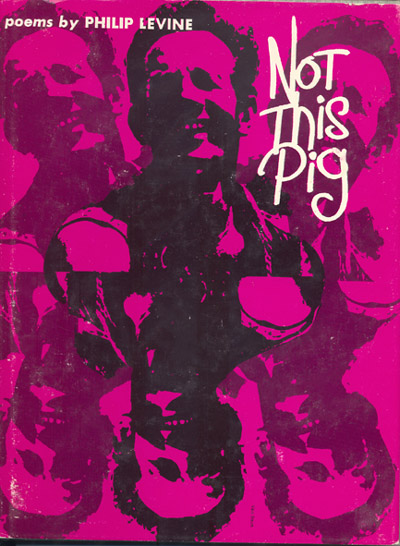 If there is an emerging genetic underclass, I could run for class president or class clown. Read more in Not This Pig (2003).
Media in Transition @ MiT
Disabled Americans today have to negotiate for the kinds of accommodations made for FDR, and the caveat “reasonable accommodation” is built into the law. President Franklin Roosevelt did not have to negotiate. He could summon vast resources of the federal government – money as well as brains – to accomplish the work of disability. And it was accomplished with such thoroughness and efficiency that its scale could be called the Accessibility-Industrial Complex had it been directed toward public accommodations and not solely the needs of a single man. Read FDR and the Hidden Work of Disability [MiT8 2013]
Shepard Fairey claimed that his posterization of a copyrighted AP news photo of Barack Obama was a transformative work protected by the fair use doctrine. In other words, it was a shape-shifter. I claim fair use, too, when I reproduce and transform copyrighted works into media formats that are accessible to me as a blind reader. Read Shape-Shifters in the Fair Use Lab [MiT6 2009]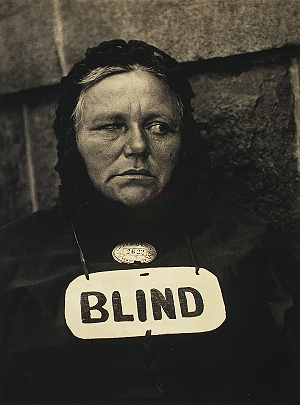
The social engineers who created a system for licensing beggars in New York never imagined that a blind woman had culture or could make culture. She herself may not have imagined it, either. In the moment when Paul Strand photographed her surreptitiously on the street in 1916, he could not have expected that one day blind photographers would reverse the camera’s gaze. Read Curiosity & The Blind Photographer. [MiT5 2007]
Tag Archives: curation
What I’m Reading - January 22, 2023
Minoru Niizuma, Yoko Ono and others at the Chambers Street loft, 1962. Gelatin silver or digital print, printed 2016, 8 x 10 in. Collection of Yoko Ono, New York. © Yoko Ono Left to right: Toshi Ichiyanagi, Toshiro Mayuzumi, Yoko … Continue reading
What I’m Reading - January 8, 2023
Trump Finds That Attack-Dog Strategy Has Its Limits - The New York Times 010617 Glenn Thrush: As a political underdog and now as president-elect, Donald J. Trump has employed the same brutal but effective go-to move when he’s tweeted or … Continue reading
Rescuing Images From Entropy’s Oblivion
The Rescued Film Project struck a chord this week with its video documenting the painstaking process of developing long-forgotten rolls of WWII-vintage film. No one knows the name of the American GI who took the pictures. Others will have to imagine the stories for him.
French Novelist Patrick Modiano Wins 2014 Nobel Prize
NYT: “Patrick Modiano, the French novelist whose works often explore the traumas of the Nazi occupation of France and hinge on the themes of memory, alienation and the puzzle of identity, won the 2014 Nobel Prize in Literature on Thursday. | In an announcement in Stockholm, the Swedish Academy cited Mr. Modiano’s ability to evoke “the most ungraspable human destinies” in his work.”
A Flaneur in the Cloud - March 3, 2023
Oscar Glow, Today’s Tech Help Short Films Find Their Fandom : NPR 022814 If you, an ordinary non-Academy member, wanted to see an Oscar-nominated short film a few years ago, you couldn’t — not unless you lived in a city … Continue reading