About the Flaneur
![Gustave Caillebotte. Paris Street, Rainy Day (La Place de l’Europe, temps de pluie). 1877. Oil on canvas. Art Institute of Chicago. [Source: Wikimedia Commons]](../../wp-content/uploads/2009/02/gustave_caillebotte_paris_street_rainy_day_1877_wiki.jpg "gustave_caillebotte_paris_street_rainy_day")
I walk through my blindness the way I wander down streets in Paris: unfettered and alive, alert to the raw material of the senses. I am a flaneur. Come along with me. Just don’t try to take my arm, unless I ask. What’s a flaneur? Read the first post, Return of the Flaneur to Galerie Vivienne. After that, try Foot Rage and the Blind Flaneur. Then stay tuned.Letting Go of Sight
![Fog at Isle Royale [Source: wildmengoneborneo.com]](../../wp-content/uploads/2008/04/isle_royale_fog.jpg "Fog at Isle Royale [Source: wildmengoneborneo.com]")
I’ve canoed on Lake Superior for almost as many years as I’ve been losing eyesight. I return year after year like a migrating loon to learn the other side of a slow, uncertain process that we could call “going blind.” After 35 years with the lake as my teacher, I know what lies on the other side. I call it letting go of sight. Read Big Water. See more about the Great Lakes.Not This Pig
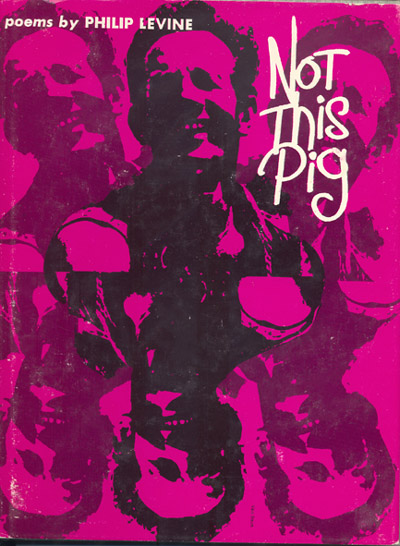 If there is an emerging genetic underclass, I could run for class president or class clown. Read more in Not This Pig (2003).
Media in Transition @ MiT
Disabled Americans today have to negotiate for the kinds of accommodations made for FDR, and the caveat “reasonable accommodation” is built into the law. President Franklin Roosevelt did not have to negotiate. He could summon vast resources of the federal government – money as well as brains – to accomplish the work of disability. And it was accomplished with such thoroughness and efficiency that its scale could be called the Accessibility-Industrial Complex had it been directed toward public accommodations and not solely the needs of a single man. Read FDR and the Hidden Work of Disability [MiT8 2013]
Shepard Fairey claimed that his posterization of a copyrighted AP news photo of Barack Obama was a transformative work protected by the fair use doctrine. In other words, it was a shape-shifter. I claim fair use, too, when I reproduce and transform copyrighted works into media formats that are accessible to me as a blind reader. Read Shape-Shifters in the Fair Use Lab [MiT6 2009]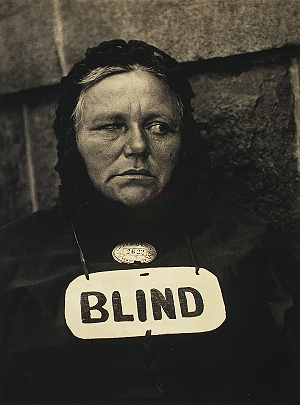
The social engineers who created a system for licensing beggars in New York never imagined that a blind woman had culture or could make culture. She herself may not have imagined it, either. In the moment when Paul Strand photographed her surreptitiously on the street in 1916, he could not have expected that one day blind photographers would reverse the camera’s gaze. Read Curiosity & The Blind Photographer. [MiT5 2007]
Tag Archives: poetry
Celebrating Our Cultural Legacy: Lin-Manuel Miranda’s 2009 White House Debut
Today is Barack Obama’s last full day in the White House. If that saddens you as it saddens me, here is a consolation. Lin-Manuel Miranda performed a nascent version of “Alexander Hamilton” at a White House poetry jam in 2009. It’s a national treasure, part of a rich cultural legacy hosted by the Obama White House. The WhiteHouse.gov clip belongs to the public domain. I hope the barbarian billionaire populists who take over tomorrow do not purge it from the Internet. Continue reading
At 86, Donald Hall Says He Doesn’t Have the Testosterone to Write More Poems
Donald Hall: “Prose is not so dependent on sound. The line of poetry, with the breaking of the line — to me sound is the kind of doorway into poetry. And my sense of sound, or my ability to control it, lapsed or grew less. I still use it in prose, but the unit is the paragraph. I had 60 years of writing poetry, I shouldn’t complain now.”
For Brendan: Moose Tracks in the Snow
When I first read The Practice of the Wild twenty years ago, I never imagined it would have its own film trailer with Facebook page. The book deserves new media, of course, although I still believe its assertion that writing is just moose tracks in the snow.
Poet Suheir Hammad : “Fear the Unexploded”
via TED: “Poet Suheir Hammad performs two spine-tingling spoken-word pieces: “What I Will” and “break (clustered)” — meditations on war and peace, on women and power. Wait for the astonishing line: “Do not fear what has blown up. If you must, fear the unexploded.””
Iran Blocks Travel By Poet Simin Behbahani
The repressive regime in Tehran has seized the passport of poet Simin Behbahani, according to NPR, blocking her travel to Paris to give a poetry reading. Known as the “lioness of Iran,” Simin Behbahani has been writing fierce poetry for decades, during the reign of Iran’s Shah, during the Islamic Revolution, during the reign of the ayatollahs, and over the past year’s political turmoil.