Daniel Defoe wasn’t pilloried for writing Moll Flanders, though doubtless many thought he should have been. Humiliation in the stocks, depicted above, was Defoe’s recompense for penning a satirical religious tract in 1703. When Moll Flanders was published in 1722, Defoe’s name was discretely left off it, and 50 years would pass before the novel was attributed to him in print. There may not have been room for it on the title page, which read in full:
The Fortunes and Misfortunes of the Famous Moll Flanders, Etc. Who was born in Newgate, and during a life of continu’d Variety for Threescore Years, besides her Childhood, was Twelve Year a Whore, five times a Wife (whereof once to her own brother), Twelve Year a Thief, Eight Year a Transported Felon in Virginia, at last grew Rich, liv’d Honest and died a Penitent. Written from her own Memorandums
I confess, Moll has kept me up past my bedtime three nights in a row! Where’s Kim Novak when I need her? I’m reading as lively a version produced by the Library of Congress (NLS). Narrated by Barbara Caruso, that audiobook is available only to blind readers, so I can’t share it here. Nonetheless, you can listen to Moll, too, via a LibriVox audio book that is freely available in the public domain, as an MP3 download or a live stream:
To this audio player, LibriVox adds the note: “We are not able to offer a simple piece of HTML to show the playlist along with the player.” For that, see the webpage.
Daniel Defoe sources: Wikipedia | Project Gutenberg | Internet Archive | LibriVox
About the image: Daniel Defoe in the pillory, 1862 line engraving by James Charles Armytage after Eyre Crowe. [Source: Wikipedia]
![Gustave Caillebotte. Paris Street, Rainy Day (La Place de l’Europe, temps de pluie). 1877. Oil on canvas. Art Institute of Chicago. [Source: Wikimedia Commons]](../../../../wp-content/uploads/2009/02/gustave_caillebotte_paris_street_rainy_day_1877_wiki.jpg "gustave_caillebotte_paris_street_rainy_day")
![Fog at Isle Royale [Source: wildmengoneborneo.com]](../../../../wp-content/uploads/2008/04/isle_royale_fog.jpg "Fog at Isle Royale [Source: wildmengoneborneo.com]")
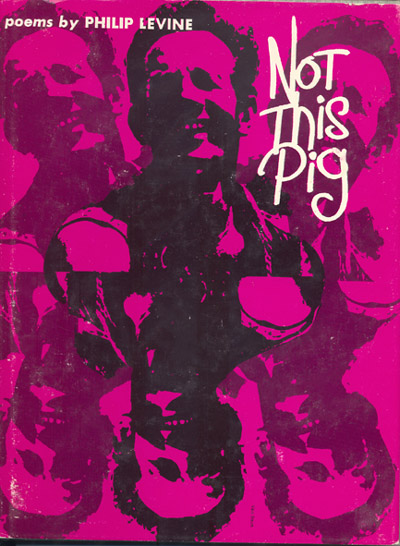 If there is an emerging genetic underclass, I could run for class president or class clown. Read more in